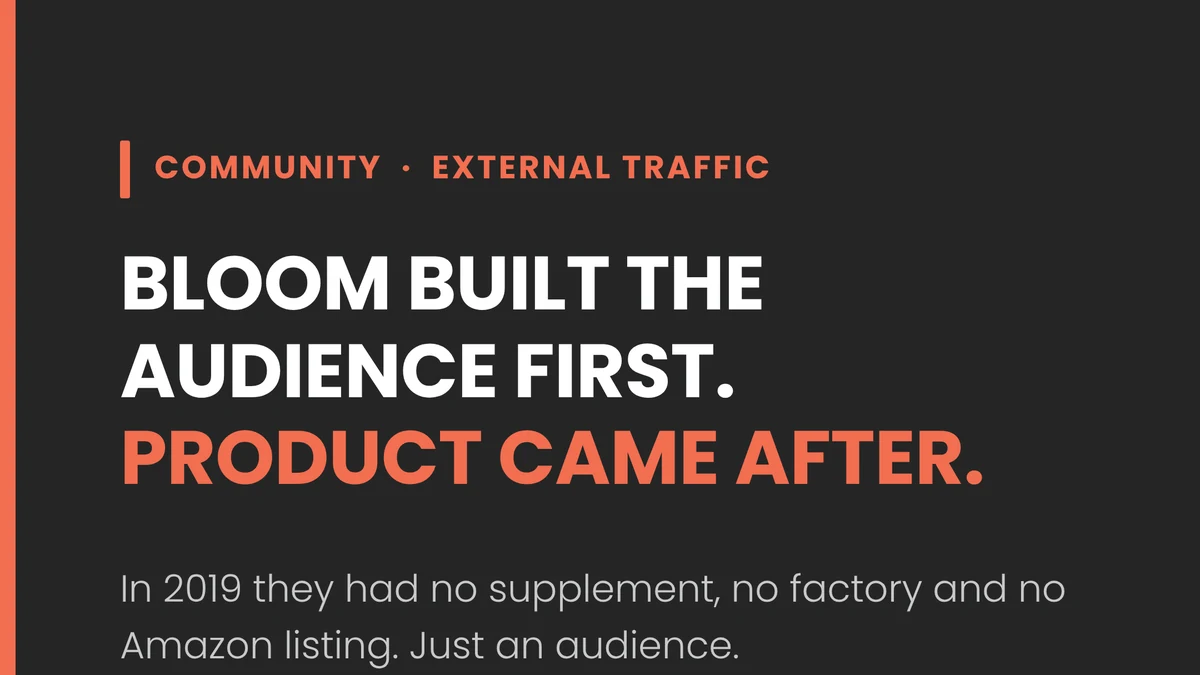
Bloom had a community before they had a product to sell.
In 2019 they were posting fitness content. No supplement, no factory, no Amazon listing. Just an audience that kept showing up.
Then in July 2024 they launched a sparkling energy drink, a new category for them, and sold a million cans in the first month. That line is now around three times the size of the supplement business that made the brand famous, and it sits at number 2 in energy on Amazon.
Nobody enters a category like that on ad spend. They launched into demand they already owned.
Community traffic has no auction
This is the part that matters if you run an ad account rather than a content calendar.
Every dollar you put into Amazon ads buys traffic that everyone else in your category is bidding on too. That is what an auction is. Your cost per click is set by how much your competitors want the same person.
Community traffic has no auction. Nobody is bidding against you for people who already know your name.
That traffic is only yours.
What it did to one of my own brands
I had this happen in April, on a natural foods brand of my own. April is normally a slow month in that category.
Community creators posted on TikTok Shop. The videos took off. What followed on Amazon:
- Brand search volume went from 6,000 to 23,000
- Sales tripled
- The main keyword moved from position 4 to position 1
- Conversion rate went up on the relevant keywords
I could barely keep stock. Back to back air shipments all month.
None of that came from a bid change. The ad account was doing what it had been doing the month before.
Why brand search volume is the metric to watch
Branded search is the cleanest early signal that off-platform work is landing, and it moves before the attributed sales do.
Someone who watches a video and then types your brand name into Amazon has already decided. They convert at a rate paid keyword traffic does not match, which lifts your conversion rate on those terms, which lifts organic rank, which brings in sales you never paid for at all.
Attribution will never credit those last sales to the campaign. That is exactly why you have to look at branded search directly rather than judging the whole effort by the attributed number.
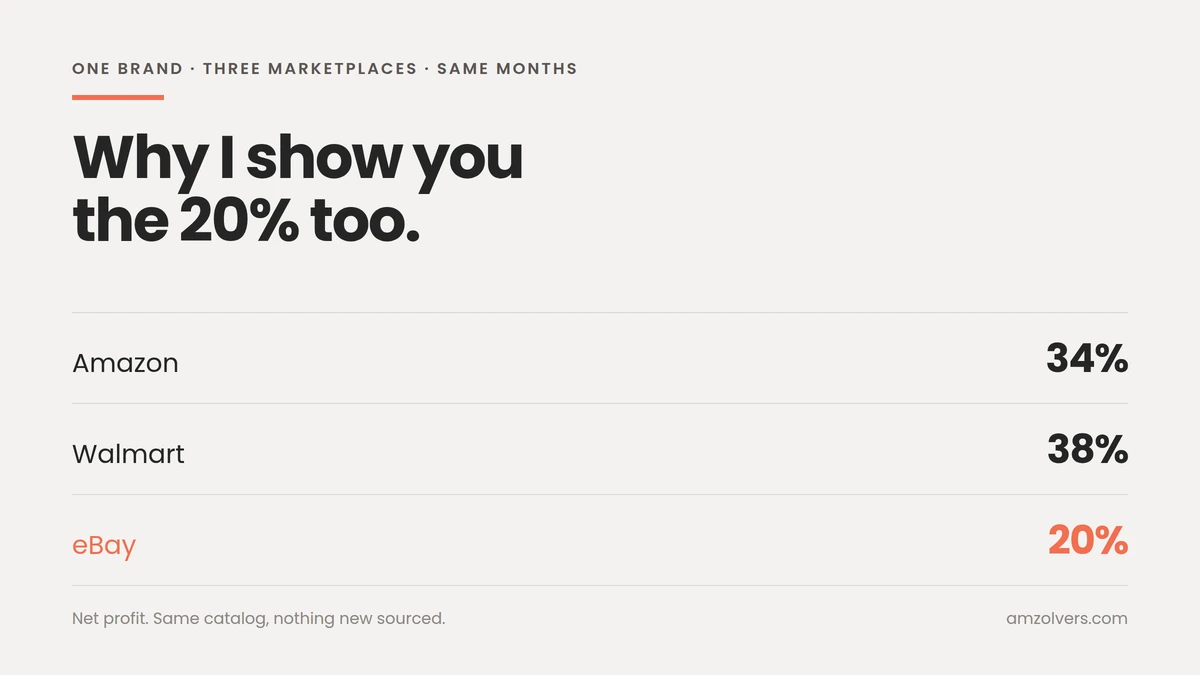
It is the same mechanic behind the Walmart search engine ads that returned 8.76 ROAS on another account, where 53% of a month’s revenue was bought off the marketplace rather than fought for on it. Demand created somewhere else, then sent in.
Why the spend is worth more than it looks
A dollar into ads buys one sale today. A dollar into audience keeps paying on every product you launch after it.
That is the whole Bloom argument in one line. The sparkling energy launch was not evidence of a good product. It was evidence of demand that already existed before the product did.
Community spend is slow, and it does not show up in ACOS. That is why most sellers cut it first, and why the accounts that keep it end up with a traffic source their competitors cannot outbid.
What are you building right now that would still bring you customers if your ads went off tomorrow?
Sources. Bloom’s first-month sparkling energy figure from stack3d, August 2024. The energy line’s size relative to the supplement business from Inc. Company background from Forbes, April 2026. The April figures are from a brand I own and run; the brand and its products are not named.